Lalena Shaver Lalena Shaver

The Night I Thought I Might Be a Good Person

We Sold Everything | April 2026

I was nineteen years old. I was lying on the ground next to a campfire somewhere in the mountains between Eugene and Bend, looking up at a night sky so full of stars it felt like an argument for something I couldn't quite name yet.

My dog Shasta was next to me. I had my hand in her fur. My friends were nearby — Brittany and a couple of others, good people, the kind of people who drive up into the mountains looking for hot springs and have a great time anyway when they can't find them, which we didn't. We had eaten mushrooms earlier and explored around the campsite and now we were settled, quiet, the fire doing what fires do.

I was thinking about my life. About my friends. About who they were and what I saw in them when I looked clearly. And what I saw was: good people. Genuinely good people. People with something real in them.

And then, very quietly, a thought arrived that I was completely unprepared for.

If they are good people, and they like me — maybe I am a good person too.

I lay there with Shasta and the stars and let that thought sit in me for a long time. It was not a loud thought. It did not arrive with any fanfare. But it landed in a place that had been empty for as long as I could remember, and it has stayed there ever since.

That was the first time in my nineteen years of living that I had ever genuinely considered the possibility that I might be okay.

I want to tell you what had to be true about a person before that thought could feel like a revelation rather than an obvious given.

I grew up in a home where scolding sometimes went beyond scolding. My mother was afraid — deeply, genuinely afraid — that my sister and I would end up like her family, a family carrying damage that ran deep and wide and had shaped her in ways she was still reckoning with. I understand that fear now. I understand where it came from and why she felt it so urgently. But the way it expressed itself was in a kind of damning — not just of our behavior, but of who we were as people. The message, received early and absorbed completely, was that something about me was fundamentally wrong. That I needed to be driven toward goodness through fear because left to my own devices I could not be trusted to find it myself.

I believed that. For a very long time I believed it completely.

I grew up willing — almost eager — to accept that I was in the wrong if anyone thought so, at any time, for any reason. It was easier than defending myself. Easier than risking the possibility that they were right and I was what I feared I was. I had no framework for being okay. I had no evidence that okay was available to me.

I spent hours in my high school counselor's office. Talking, sharing, looking for something I could only call hope. I didn't have a word for what I was looking for then. I just knew I was looking. I knew there was something more than what I had been handed and I was desperate to find it.

The low self-esteem created a ceiling I couldn't see clearly but ran into constantly. I could move — God, I could move, I was good at moving, at picking up and going somewhere new and starting over with a clean slate. But I could only go so far. The semester I started but couldn't finish. The relationship that ended at eighteen months because something in me didn't know how to stay past the point where being truly known became possible. The yes I wanted to say but found a no coming out of my mouth instead because wanting something and believing you deserved it were two completely different things and I had only ever managed the first one.

My theme songs in those years were Ramble On and Rambling Man. Later, once I found Widespread Panic, Driving Song. I wore these songs like a philosophy. Movement as freedom. Movement as identity. I told myself I was someone who didn't stay put, as though that were a character trait rather than a coping mechanism. As though the running were chosen rather than compelled.

It wasn't until much later that I understood the difference.

Krista understood it before I did, I think. We met in Yellowstone — she was everything I was not. Bold where I was quiet. Unafraid to say exactly what she was thinking or feeling while I was still measuring every word against what people might think of me. She valued academia and committed to it completely — four-year degree, then her master's. She wanted children and had two extraordinary daughters. She knew what she wanted and moved toward it with a directness I could only watch and quietly marvel at.

We had the same wounds underneath. The same complicated mothers, the same difficult childhoods, the same things we were both trying to outrun or overcome. But she had found a way to move through the world as though she was allowed to be in it. As though she had already settled the question of her own worthiness.

I was still trying to find the question, let alone the answer.

The gift certificate to The Curiosity Shoppe came a little later, and it cracked something open. The books. The herbalist. The astrologer. The community of women who met me exactly where I was and didn't suggest I needed to be anywhere else first. The Alchemist told me to follow the signs, to trust what I felt, to have faith in the path even when I couldn't see it. I held onto that with both hands.

And still. Still the ceiling. Still the semester I couldn't finish. Still only able to go so far before something in me called a halt and I moved on instead of through.

At twenty-five I started working with at-risk teenage girls at a wilderness program. I devoured every training, every manual, every framework I could find. I knew — I knew in a way that was almost uncomfortable — that everything I was learning applied to me as much as to them. That the girl who emerged from the tent each morning with new light in her eyes was a version of the girl I had been. That the work I was doing with them was also the work I was doing on myself, one conversation, one campfire, one five-mile graduation hike at a time.

I kept reading. I kept going to therapy — a few months here, two years there, always returning when life got loud enough that I needed the container of it. I kept using every tool I could find. Mushrooms, in those years, as both recreation and something closer to ceremony — always spending time alone first, opening myself up to possibility, hoping I would learn something I hadn't known before. Slowly, slowly, the ceiling lifted.

Then I found Brené Brown. Her story resonated with something so deep in me I can still feel the first time I encountered her work — the shame research, the vulnerability, the radical idea that the thing you think disqualifies you is actually the thing that connects you most fully to other people. That the story you tell yourself about being fundamentally broken is not the truth. That worthiness is not something you earn. That you were allowed to be here all along.

I read her the way I had read The Alchemist. With both hands. With relief.

I am still in this work. I want to be honest about that.

I have made progress that is, by any measure, tremendous. The girl who lay by that fire at nineteen and had the terrifying quiet thought that she might be okay has come a long way from that campsite. But there are still fundamental lessons about self-love and boundaries and how I see myself that I have not yet fully learned. It is complicated and messy and ongoing, the way real growth always is.

And then came the RA.

Rheumatoid arthritis is an autoimmune condition — which means, in the most literal sense, that my body is attacking itself. When I received that diagnosis, alongside the devastation and the relief of finally having an answer, something else arrived: a recognition that hit me somewhere very deep. I had spent my entire life learning about the psychoneuroimmunological link — the connection between emotional pain and physical illness, between chronic stress and inflammation, between the stories we carry in our nervous systems and the ways our bodies eventually respond to them. I had read Gabor Maté and Bessel van der Kolk and Candace Pert. I had done the somatic work and the therapy and the meditation.

And still. Still my body had found a way to make the inside visible on the outside. Still the pain and the fear and the exhaustion of a lifetime had expressed themselves in the most direct language a body knows.

I am not saying this with blame. I am saying it with compassion — for myself, finally, more and more. My body was not betraying me. My body was communicating with me, the way it always has, the way it always does for all of us, in the only language it has available when we haven't yet heard the quieter ones.

The RA became a crash course in healing at a level I had not previously considered. And Spain — the warm dry Mediterranean climate that is genuinely better for autoimmune symptoms — is not just a dream. It is part of the prescription.

This blog is the journey to Spain. But it is also — it has always also been — a healing journey. The two are not separate. They never were.

That is what Field & Frequency is. Everything I have learned and am still learning, offered to other women who are living some version of this story — the ceiling, the running, the body that finally says enough, the long slow beautiful work of becoming the person you always hoped you might be.

It began at a campfire at nineteen, with my hand in my dog's fur and the stars overhead and a thought so quiet it almost didn't arrive.

Maybe I am a good person too.

I have been building on that thought ever since.

Next — Kelly's story. A different kind of becoming, told with the same honesty.


Read More
Lalena Shaver Lalena Shaver

Why We Sold Everything

It All Begins Here

People ask us this all the time. Sometimes with admiration, sometimes with confusion, occasionally with something that looks a little like envy. Why did you sell everything?

The honest answer is that there was no single moment. There was an accumulation of them — quiet at first, then louder, then impossible to ignore.

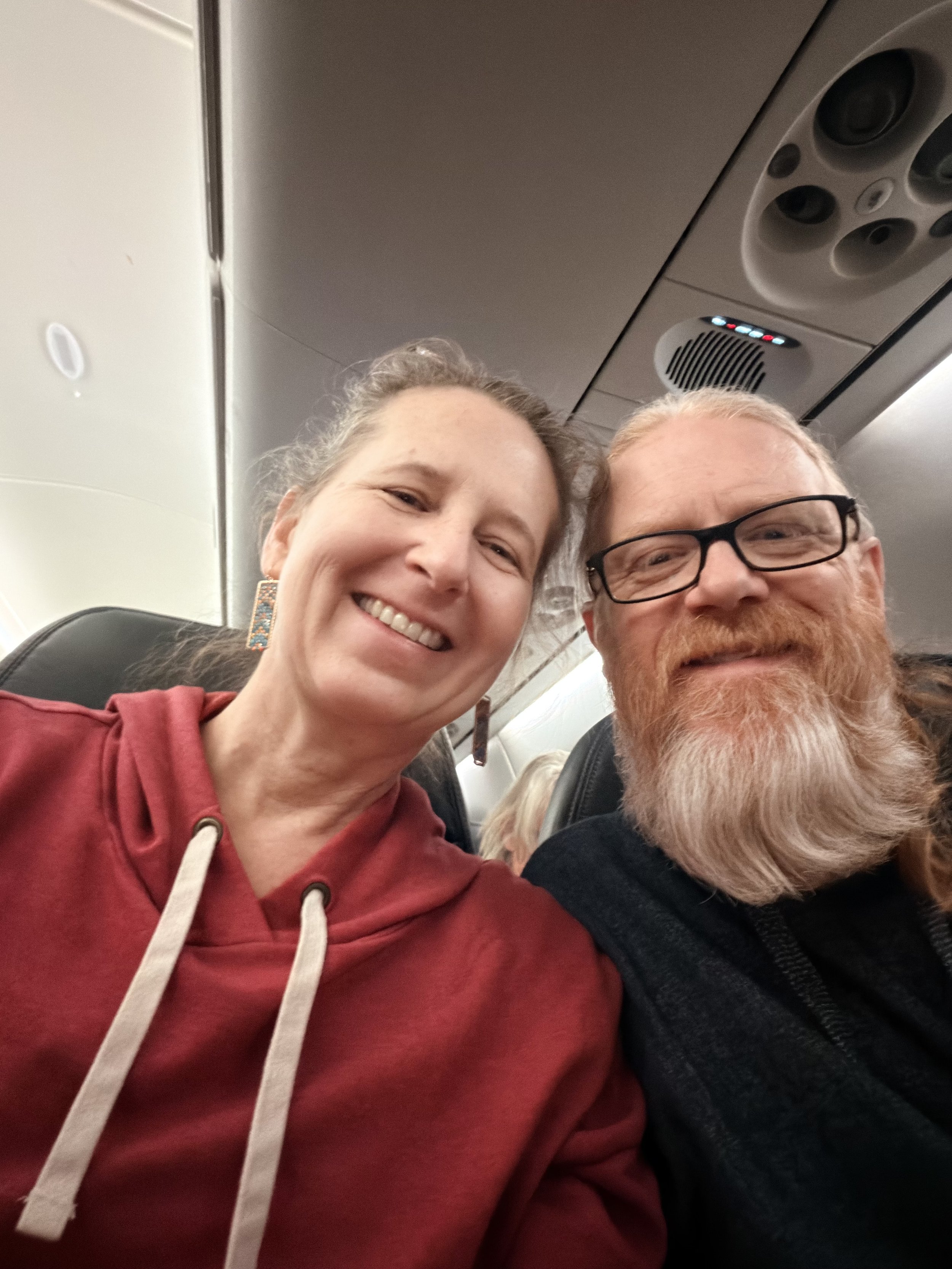
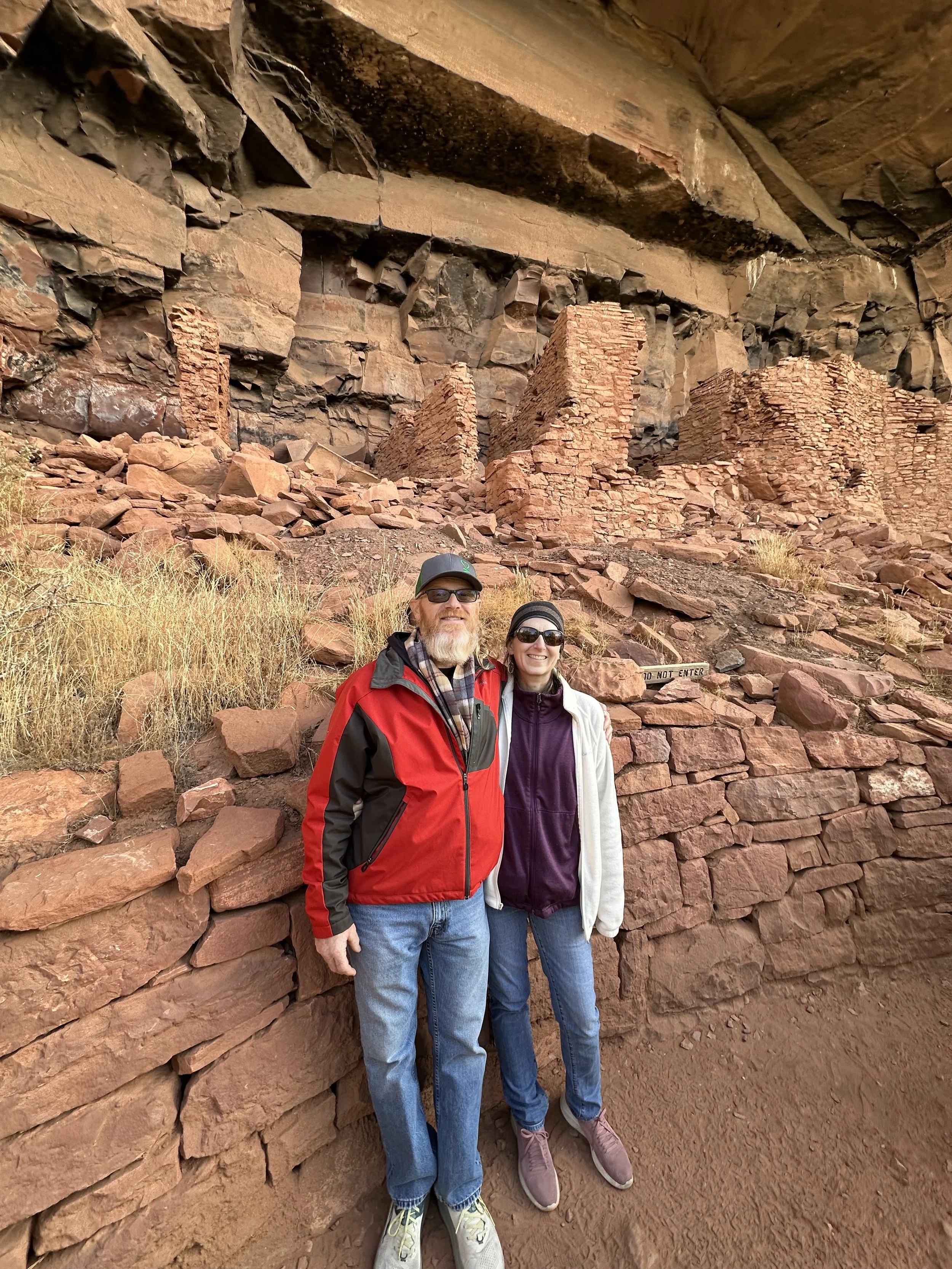
We are Lainie and Kelly. A married couple in our mid-fifties who have never really done things the conventional way, and who stopped apologizing for that a long time ago.

We met on a summer evening at the Bend Brewfest — Kelly working at Whole Foods, me at a nonprofit serving people experiencing homelessness. Three weeks after we met we were living together. Fifteen years later we are still in the same room by choice, still working side by side when life allows it, still the first person the other one wants to tell things to. We fell fast and we fell hard and neither of us has ever quite recovered, which suits us both just fine.

We have not lived a conventional life together. We grew cannabis off the land on ten acres in southern Oregon — farming, growing our own food, cutting our own firewood, living simply and completely in a way that most people only romanticize. When the power went out for a week we were fine. We cooked on the woodstove. We had a full pantry. We thrived.

We moved to Arizona for the sunshine and the warmth and because we had both felt, independently and then together, that grey skies were costing us something we couldn't fully name. We worked in travel, specializing in Western Europe — building other people's dream trips to the countries we quietly knew we would live in ourselves one day.

And then the pandemic came and took that world apart, and we rebuilt, and kept going, the way we all did through that time.

Through all of it there was a knowing. Quiet at first. One day we will go. Not a plan exactly — more like a compass bearing. A direction we were always pointing toward even when life required us to point somewhere else first.

Then two things happened that made the quiet knowing into something louder.

Kelly lost his dad.

His father had been disappearing for years before he died — Parkinson's and dementia taking him slowly, piece by piece. Kelly had wanted more closeness than was ever quite offered between them, and losing his dad meant losing the possibility of that closeness ever arriving. It is a particular kind of grief, quiet and deeply felt, that does not announce itself. It settles into the body and stays.

When his father died, we looked at each other and understood something that we had perhaps always known but had not yet said plainly: life does not wait. It does not hold its breath while you finish getting ready. It moves, with or without you, and the only question is whether you are moving with it.

Around the same time, I was diagnosed with rheumatoid arthritis.

It had taken two years to get that diagnosis — two years of joint pain spreading from one finger to every finger, both wrists, my shoulders, my knees, my jaw. Two years of being told by doctors that my blood work was normal and I was fine. Two years of knowing something was wrong and being sent home anyway. The diagnosis arrived after the worst flare of my life — a morning when I woke completely unable to move, every joint screaming, Kelly carefully helping me into the car and driving me to urgent care.

The PA who saw me took one look and said: everything you are describing is classic rheumatoid arthritis.

I was shocked. Then relieved. Then something more complicated — a deep frustrated recognition that the burden of figuring out what was wrong with my own body had fallen almost entirely on me. That is a story for another post. What matters here is what came after.

They say RA is not curable. But it is manageable. And one of the most consistent things in the research is this: warm, dry climates make a measurable difference in symptom management. We had already felt this when we left Oregon for Arizona — the sunshine had done something for both of us that grey skies never could. Spain, with its Mediterranean climate and abundant vitamin D, is not just a dream destination for us.

For my body, it is genuinely the right place to be.

So we made the decision.

We sold nearly everything. We moved in with Kelly's mom in Bend — both to be there for her through her first year of living alone after losing Kelly's dad, and to save money and plan. We spent this time writing, researching, building the online businesses that will sustain us, and pointing ourselves with increasing certainty toward a different life.

We are late bloomers in the best possible sense. Late to find each other. Late to settle down. And now choosing to bloom again in a country — in countries — that feel like they were waiting for us.

The road has shifted a little since we first started planning — life has a way of doing that, and we will tell you all about it as we go. But the direction has not changed. The dream has not changed. The knowing that started quiet and became something we could no longer ignore has not changed.

We sold everything because we ran out of reasons not to.

We sold everything because Kelly's dad died and my joints started screaming and we looked at each other and understood that someday is not a real place on any map we have ever seen.

We sold everything because the conventional path never quite fit the shape of who we are, and we stopped trying to make it fit a long time ago.

We sold everything because the dogs deserve to feel Mediterranean sunshine on their faces.

And because we do too.

Follow along. We are telling this honestly and in real time — the whole messy, beautiful, terrifying truth of it. Subscribe below so you don't miss what comes next.

Read More
Lalena Shaver Lalena Shaver

Meet Mollie

It All Begins Here

We Sold Everything | April 2026

There is a certain kind of person who, upon meeting Mollie for the first time, looks down at this small dark dog and makes the mistake of underestimating her.

They don't make it twice.

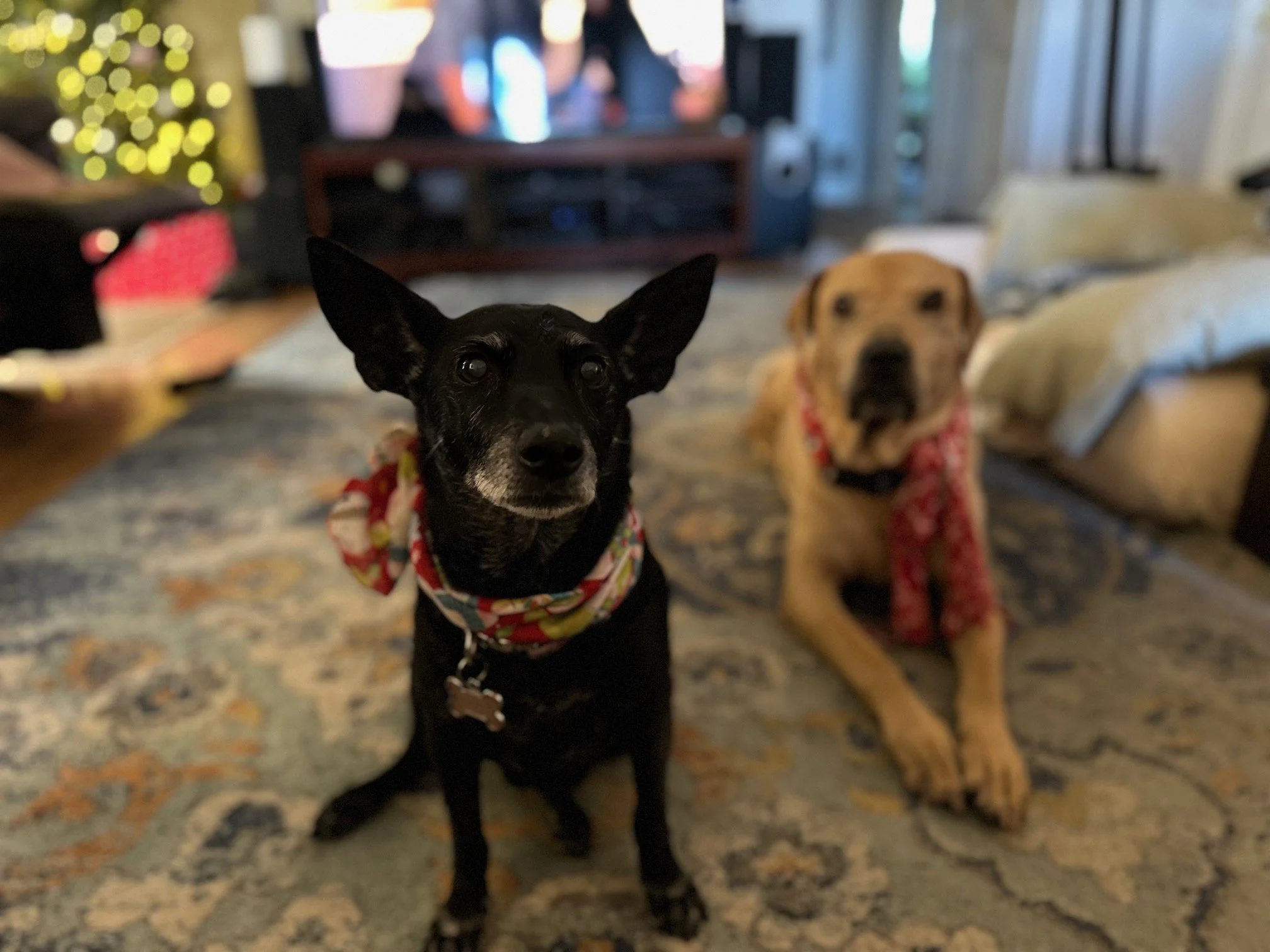
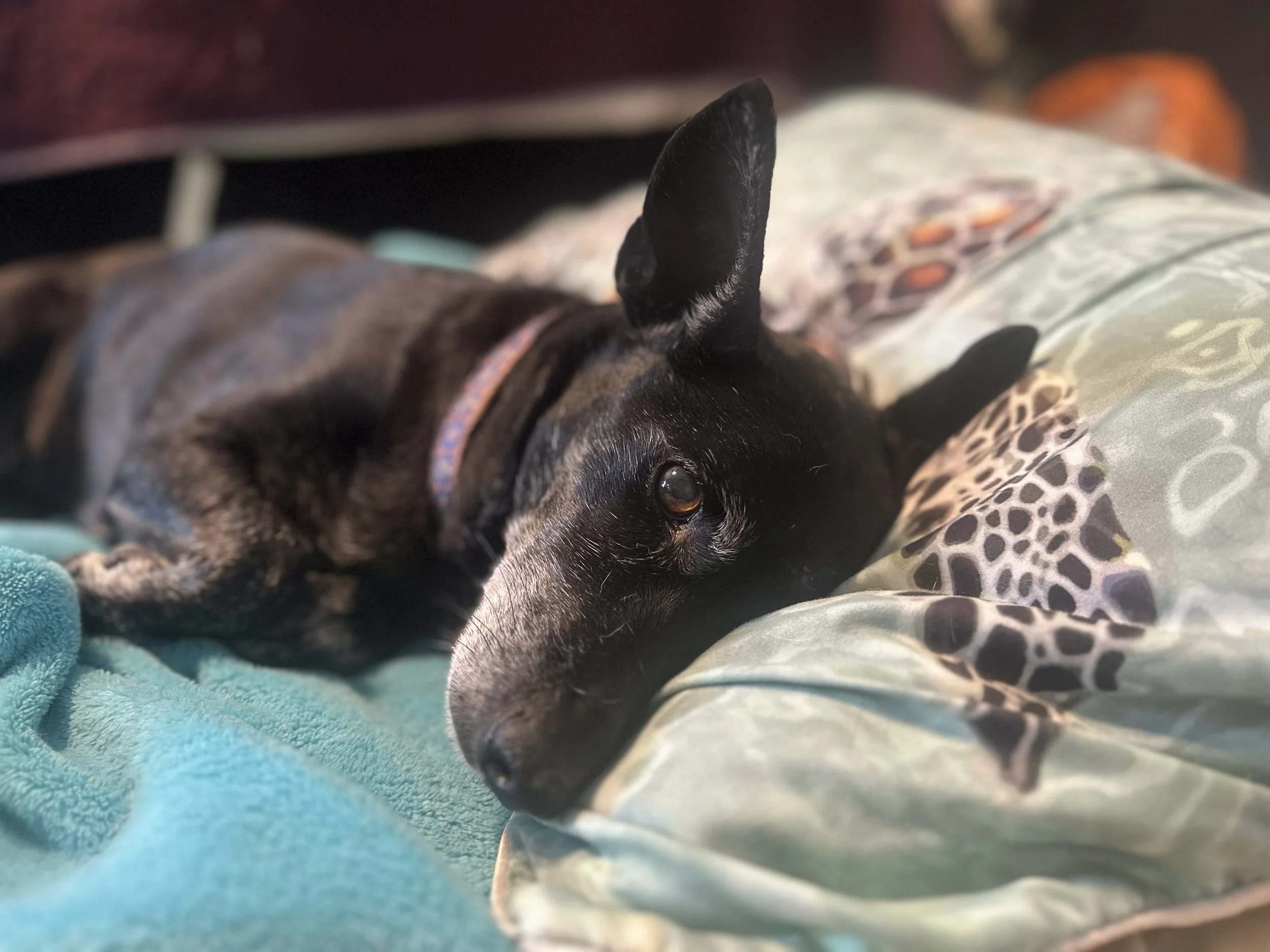
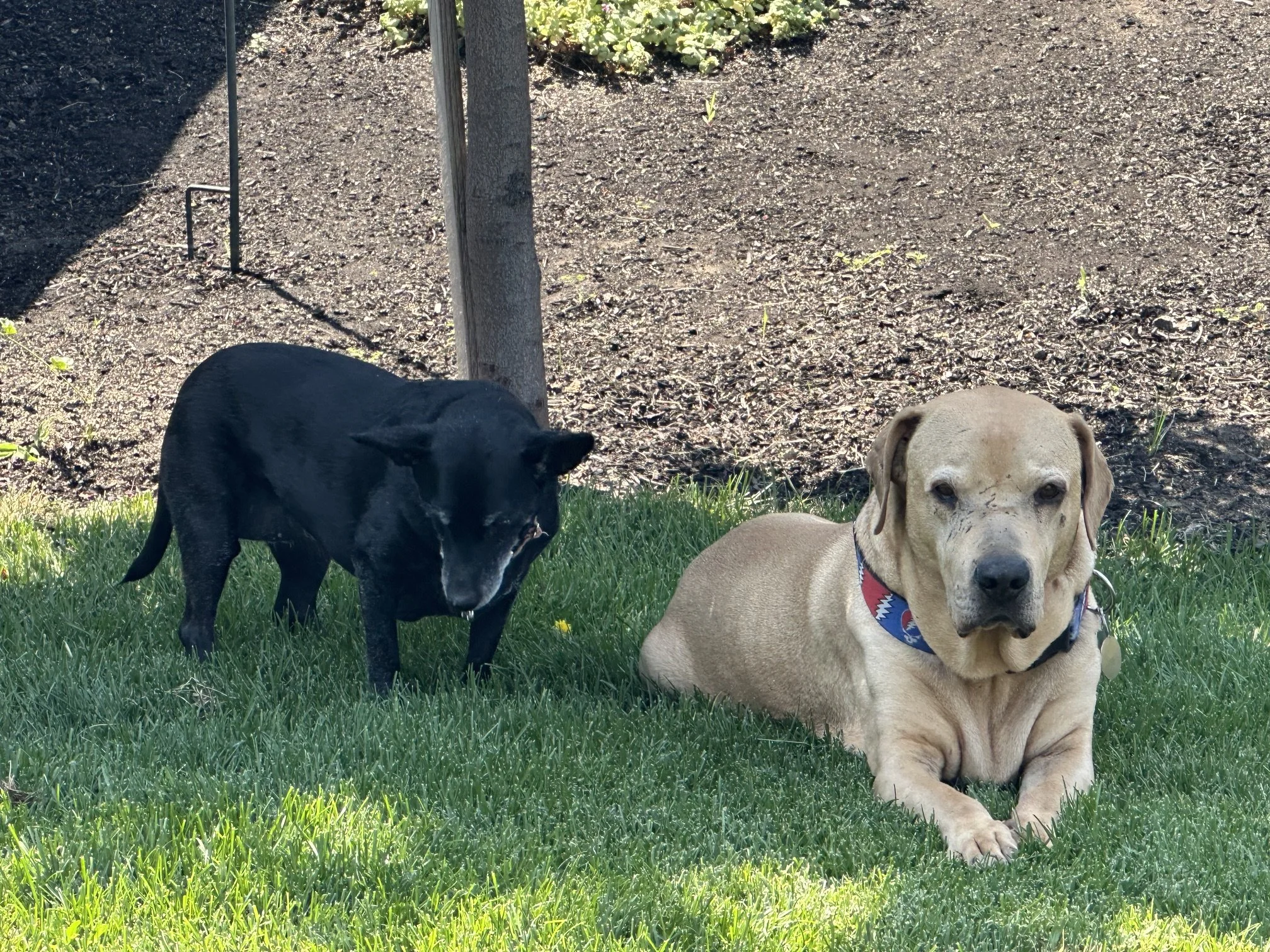
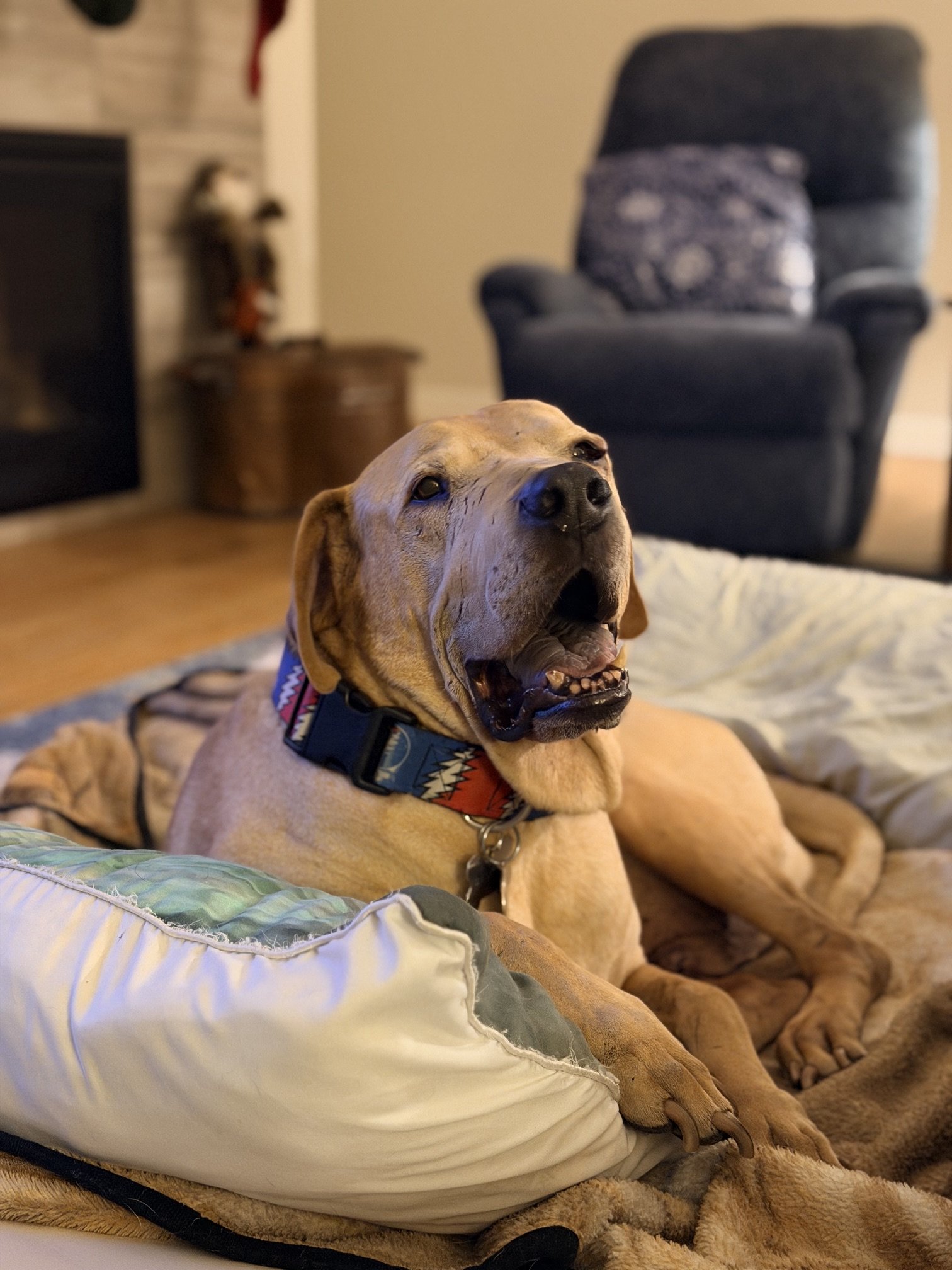
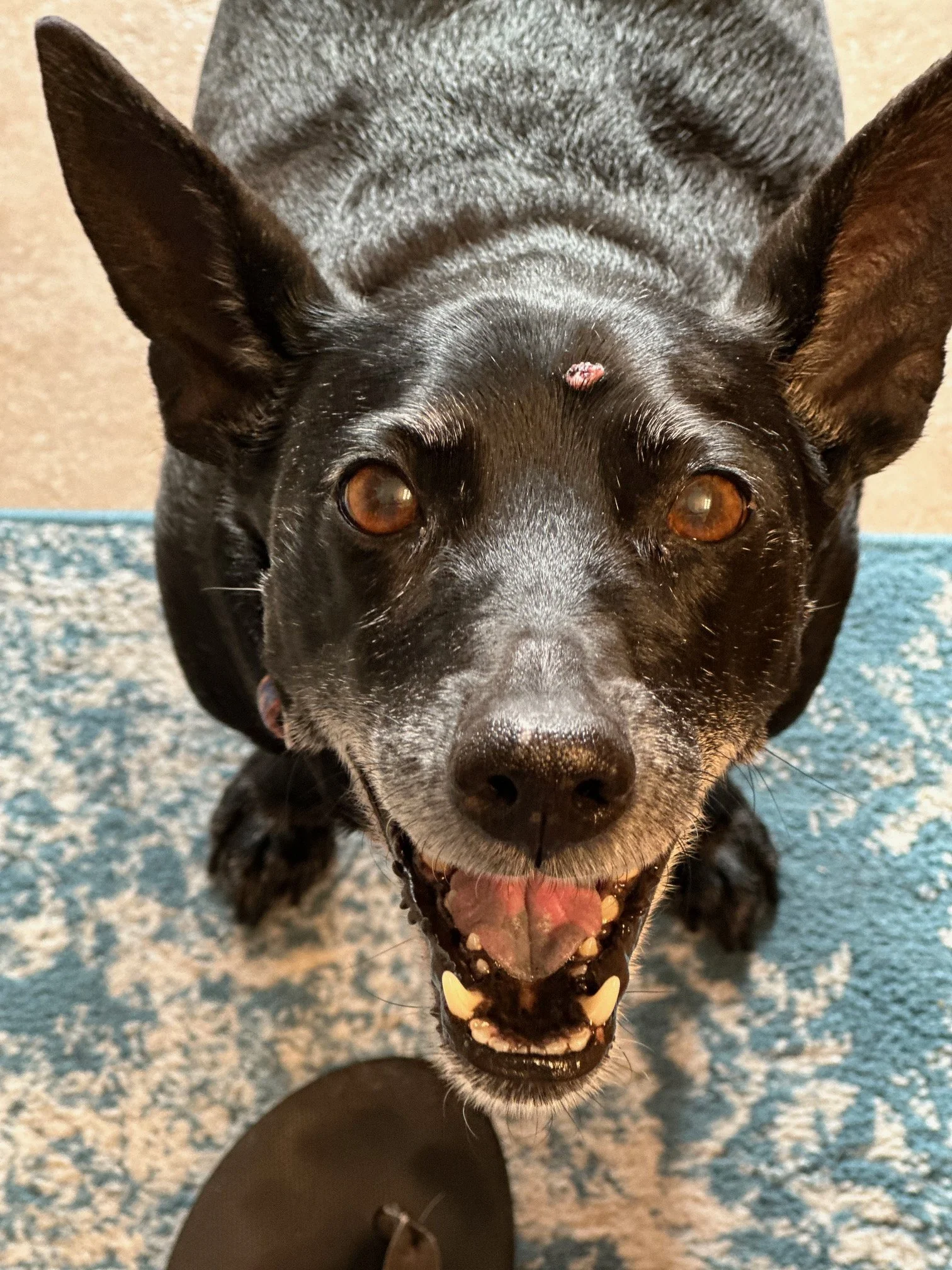
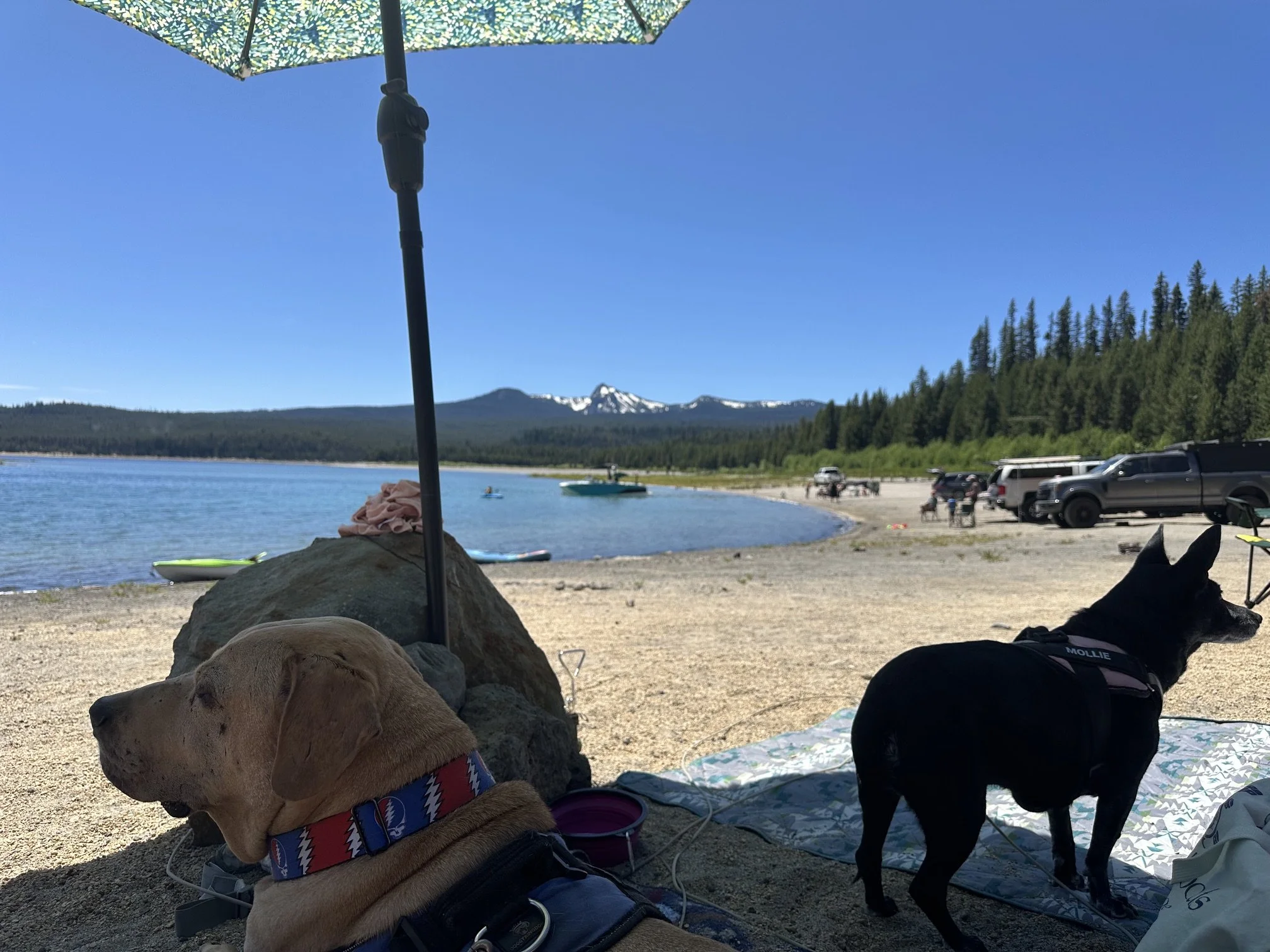
Mollie is a 28-pound Manchester Terrier. She will turn seventeen in June. She has been running this household since the day she arrived, and she has never once questioned her authority to do so. She is the first one anyone greets when they walk through the door — not because we have trained anyone to do this, but because Mollie has. She simply appears, and people understand instinctively that this is the one who matters.

She is also, if I'm being honest, the reason half of you are here.

How She Found Us

Kelly was working as a pool technician in Fountain Hills, Arizona — maintaining backyard pools for clients across the neighborhood — when he met Mollie. She belonged to one of his clients, a woman who had passed away from cancer. The family, unable to keep her, was preparing to surrender her to a shelter.

Kelly came home that evening and practically begged.

Here is the part that still makes me laugh. I had been lobbying for another dog for months. Kelly had been the reluctant one — pumping the brakes, not quite ready, not quite sure. He had been the one saying not yet while I quietly kept making my case. So when he walked through the door that evening with the careful expression of a man preparing to argue for something he wasn't sure he could win, I let him get about halfway through his pitch before I stopped him.

I told him he had me at hello.

The relief on his face was something I will remember for a long time.

The Name

What we didn't know until Mollie's vet paperwork arrived — a few days after she came home with us — was the detail that sealed everything and made us certain she was always supposed to be ours.

When Mollie had been a stray in her first year of life, taken in by a shelter, the shelter had given her a name.

Lanie.

Spelled almost identically to mine.

I am not a person who dismisses these things. I never have been. I believe the universe communicates in exactly this kind of language — the quiet, specific, undeniable kind that you would have to work very hard to explain away. We took it as a sign. We still do. We always will.

She has collected many names since then. Little Peanut. Little Nut. Little Nut Nut. Mostly we just call her The Nut, or Nutty, which suits her completely and which she accepts with the dignity of someone who understands that a nickname is just another form of love.

Who She Is

Mollie came to us at almost twelve years old, which means she had already lived a full life before she became ours. She arrived knowing exactly who she was. She has never wavered on the subject.

She is the cuddliest little diva you have ever met. She sleeps on us most nights — finding the warmest spot, which is almost always on top of one of us, and settling there with the confidence of someone who has never once been asked to move and doesn't intend to start now. She is demanding in the best possible way. She expects to be included in everything and is frankly baffled when she isn't.

She also, somewhat late in life, discovered the profound joy of walking.

Once she discovered it, she never looked back. For years Mollie has gone out five to six days a week — She was a lean mean walking machine who took this commitment seriously. She used to lead the way, setting the pace, nose forward, all business, absolutely certain of where she was going and how long it should take. She owned every route we ever walked together. We were in her neighborhood, and she let everyone know it.

The first few years in Arizona, it was always hot, or at least warm and that suited her just fine. She is an Arizona girl through and through. Moving to Oregon this year meant fewer walks, her choice, she is a “fair-weathered” walker now. More about that in a moment.

What hasn’t changed is she is in charge of this family. She has always known it. We stopped pretending otherwise years ago.

Seventeen

Here’s the thing, she is turning seventeen in June. I want to sit with that for a moment, because it is both a miracle and a tenderness that is hard to hold sometimes.

Seventeen years is an extraordinary life for any dog. For a Manchester Terrier who spent her first year as a stray, who lost her first real home to cancer, who came to us at nearly twelve already shaped by a whole history we weren't part of — seventeen years feels like a testament to something essential in her. Her stubbornness. Her will. The particular invincibility of a small dog who has always believed herself to be much larger than she is.

But she is slowing down. And I see it every day now, in the small accumulations that I try not to catalog too carefully because the cataloging makes it too real.

Her eyesight is about half gone. Depth perception has become unreliable, and shadows at night are especially confusing for her — she'll hesitate at the edge of something dark, trying to read it, and I'll wait quietly while she figures it out. She sleeps longer during the day now, a little more each week it seems, and when she wakes there is a tiredness around her eyes that wasn't there a year ago. She doesn't jump as far or as accurately as she once did. I've learned to watch where her little body lands when she jumps onto the couch — she'll settle herself right at the edge of the ottoman without noticing, and I'll reach over and shift her gently before she slides off, and she'll look at me with the expression of someone who didn't need any help and would appreciate it if I remembered that.

On her walks she no longer leads. She walks behind me now, more slowly, stopping longer to smell things — really smell them, taking her time, unhurried in a way she never used to be. The route that used to be a march is now a wander.

I think she has earned the wander. I think she has always known things about how to move through the world that I am only now beginning to understand.

The Question We Can't Quite Answer

She is the reason the logistics of this move keep Kelly and me up at night.

Getting Mollie and Samson to Europe — both of them in cabin with us, the way it has to be, because neither of them is going in cargo and that conversation is closed — will cost somewhere between $16,000 and $20,000. That is a real number. It takes a significant portion of what we have to work with, and it sits alongside the cost of visas and deposits and getting established somewhere new while our online income is still finding its footing.

We have looked at crossing by ship. There is something that moves me about that idea — arriving in Europe the way Kelly's grandmother arrived in America, by sea. But the ship option means Mollie and Samson would be in kennels by themselves at night for seven or eight nights. Alone in the dark without us. And I cannot do that to her. I cannot do that to either of them.

So we are holding the question. Turning it over. Some days the answer feels close and some days it doesn't.

And then there is the harder thing — the thing that I think about quietly, usually late at night, and that I am going to say here because this blog is the whole messy beautiful terrifying truth and I promised you that from the beginning.

Mollie is seventeen in June. The potential move to Mexico in case Europe didn’t work out— which we recently had to set aside for other reasons — would have been driveable. She could have come with us in the car, no separation, no cargo, no trauma. Europe is different. Europe is a flight or a ship and a crossing and a transition that her small aging body may or may not be ready for.

Sometimes Kelly and I wonder whether we should wait. Whether the kindest thing — the most loving thing — is to let her finish her extraordinary life in Oregon or somewhere warm and close, on her own schedule, surrounded by the people who love her most. Whether the Atlantic crossing, however carefully arranged, is simply too much to ask.

We have not answered that question. We are living inside it, the way you live inside the questions that matter most — carefully, and with as much grace as you can manage.

What I know for certain is this.

Mollie has been a stray. A shelter dog. A beloved companion who lost her person. A dog rehomed at nearly twelve to a man who begged and a woman who already knew the answer. She has walked five days a week owning her domain. She has slept on top of us every night. She has run this household with the quiet authority of someone who never needed a title to know her own power.

She arrived with a name that was almost mine. We took it as a sign.

Whatever the Atlantic holds — whether she crosses it or whether she finishes her remarkable life on this side of it — she will do it exactly as she has always done everything.

Warm. Loved. Certain she is exactly where she belongs.

She is not our pet. She is our family.

And wherever we go, we go together.

Next — meet Samson. His story is a different kind of love.

Read More
Lalena Shaver Lalena Shaver

Meet Samson

It All Begins Here

We Sold Everything | April 2026

I knew before he arrived.

The foster coordinator insisted on keeping him on a leash when she brought him in — a precaution, she said, given his history and the two failed placements before us. I thanked her and said of course. And then Samson walked through our door, took one look at Mollie, took one look at our home, and within moments the leash came off.

Of course it did. He was already home. He just didn't know it yet.

Where He Came From

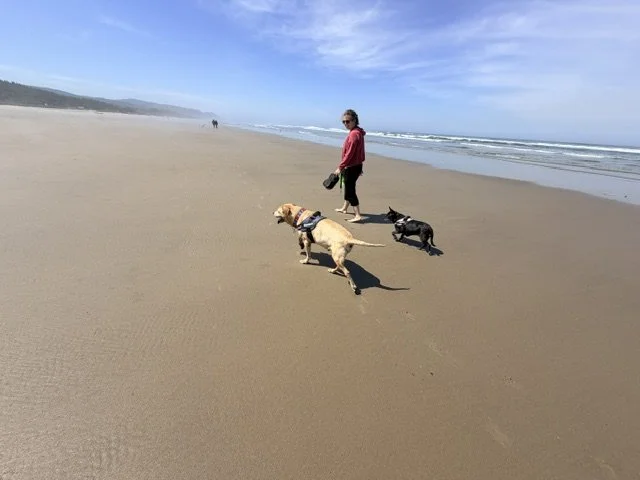
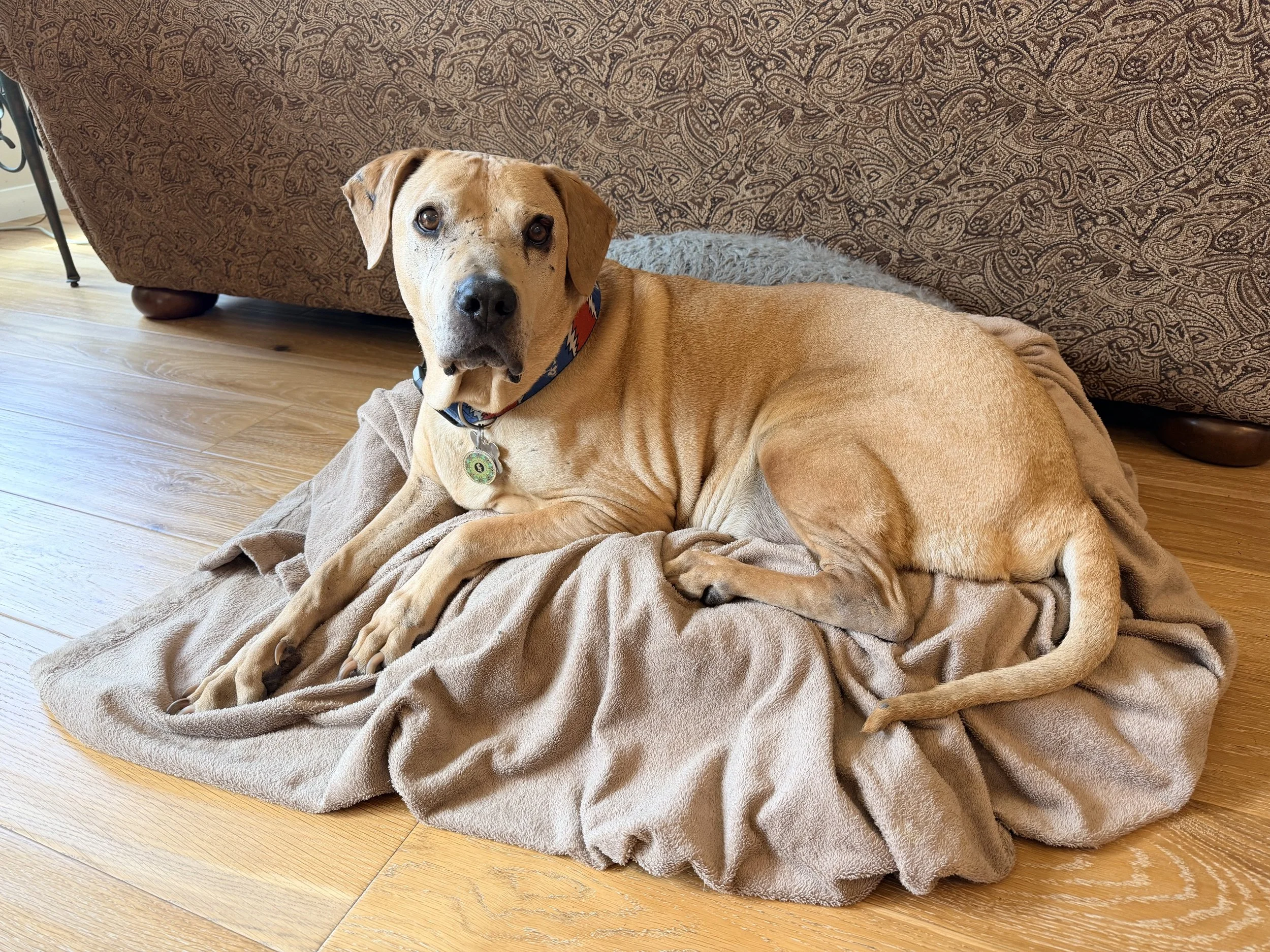
Samson is a Rhodesian Ridgeback, Chow Chow, and Lab mix — a big beautiful boy who arrived at our door weighing 60 pounds when he should have weighed 90. He had been used as a bait dog in dog fighting rings. Dumped. Left for dead. His body told the whole story without a single word — scars across his skin, a tear in his ear, a sternum broken and shifted slightly to the right, his back end underdeveloped from years of living in a cage too small for a dog his size. He was emaciated. He could barely walk.

He had been through two foster placements before us, both unsuccessful. When the urgent call came asking if we could take him, I already knew before I answered that the leash they were bringing him in on would be unnecessary.

What I called fostering, I now understand was never fostering at all. What they call a foster fail, we call destiny.

The First Weeks

The first thing Samson did in our home was sleep.

He slept for weeks. Deep, still, unguarded sleep — the kind that only comes when a body has finally been given permission to stop surviving and just rest. We gave him the oversized Tempur-Pedic beds that had belonged to Reef, our previous dog, and I believe the comfort of those beds mattered more than I can prove. Something about that softness — something about finally having a surface that held him gently instead of a cage floor that didn't — I think it reached him somewhere beneath consciousness.

We started making his food from scratch immediately. Rotating meats, vegetables, supplements — everything researched, everything intentional. We still make his meals today, his and Mollie's both. We always will. It matters to us that they know their food comes from our hands.

There were moments in those first weeks, between the long stretches of sleep, when Samson was awake — mostly for meals, because Samson has always understood that meals are sacred and not to be missed. He loves his food with a sincerity that I find deeply endearing. But in those wakeful moments, between bites and between sleeps, he would watch.

He watched everything.

One evening I was getting Mollie settled on the couch — tucking her blanket under and around her just so, the specific ritual she requires for optimal comfort, which has many steps and must be performed correctly or she will stare at you until you start over. I was doing this with the focused attention Mollie demands, and I happened to glance over at Samson.

He had lifted his head. Just slightly. Turned it just slightly to one side. And he was watching me tuck the blanket around this small bossy dog with the quiet, careful attention of someone witnessing something they don't quite have a name for yet.

I watched his face as he watched me. Something was shifting in it — slowly, almost imperceptibly, but I saw it. He was registering what love looks like when it moves through a room. He was filing it away. He was getting curious about what kind of life this might turn out to be.

I started talking to him then, in the softest voice I had. Telling him how happy we were that he was here. That he deserved a good life. A happy life. A loved life. That nothing that had happened to him before was going to happen to him here.

He didn't move. But he kept watching. And I kept talking.

Little by little, over the days that followed, he let me do a little more. Stay a little longer. Pet him a little further along his back before he'd shift away. Each small allowance was its own negotiation, its own quiet test. I tried to pass every one.

Learning to Walk

When we started going on walks, I shortened them considerably — his body was still healing, still building the muscle and stamina his years in a cage had taken from him, and I wanted him to set the pace and the distance. Not me. Him.

Within a month or so, as he was getting stronger and was no longer hungry and was beginning to understand that the love coming at him was consistent and wasn't going to stop, something opened up in him. He became more curious. More eager. He started to understand that walks meant the world, and the world was worth being excited about.

But the moment I will carry with me always happened at an intersection.

We had reached a corner — the kind of ordinary neighborhood corner where you simply choose a direction and keep walking — and Samson stopped. Just stopped, and stood there. And then, very slowly, he turned his head and looked down one direction of the street. Held it there for a moment. Then turned and looked down the other direction. Taking in both possibilities. Considering them.

I stood with him and waited.

It took me a moment to understand what I was seeing. But then I understood it completely, and it hit me somewhere I was not prepared for.

I don't think he had ever been on a walk before. I don't think he had ever stood at a corner and understood that the world extended in multiple directions and that he was allowed to choose one. I don't think he knew that neighborhoods like this existed — full of other dogs on leashes with their people, and parks with fountain paths, and familiar faces that would come to recognize him and be glad to see him. I don't think he knew any of it was available to him.

He was looking at it now. Both directions. Taking his time.

I stood with him and let him have every second of it.

Who He Is Now

Samson goes from 60 pounds to 90. His fur grew back velvety soft. A light came into his eyes that wasn't there before — I noticed the exact day it arrived and have never forgotten it.

He is a big goof. A bull in a china shop who has absolutely no idea how large and clumsy and magnificent he is. When it's time for a walk, his whole body gets involved in the announcement — tail whipping, body wiggling, the full production of a dog who has learned that good things are coming and has decided to feel that fully and without embarrassment. I love this about him more than I can say.

He rarely barks. In three years, perhaps four times. He is calm and respectful and the easiest soul to share a home with. He loves meeting other dogs on walks — really loves it, the greeting, the sniffing, the brief joyful exchange between two creatures who both know what it is to be out in the world on a good day. Knowing what I know about where he came from, I believe he feels it every time. The normalcy of it. The safety of it. The fact that he gets to be like the other dogs — the ones who have only ever known this, who have never known anything else. He gets to be one of them now. A regular dog on a regular walk in a regular neighborhood where nothing terrible is waiting for him.

He is safe. I think he knows it. I think that is what all the curiosity is — a dog who spent years unable to look around, finally looking around, and finding that the world is better than he had any reason to believe.

Sammy and Kelly

Rhodesian Ridgebacks and Chow Chows are known for choosing one person and giving that person everything they have. Samson chose me. Given his history with men, we were not surprised that Kelly wasn't his first stop.

What surprised us — what moved us — was how quickly that changed.

We have always called Kelly the dog whisperer, because dogs have an inexplicable and consistent way of gravitating toward him. They always have. There is something in his stillness and his patience that animals seem to recognize as safe. So he did what he does — quietly, without forcing anything, with infinite patience and an endless supply of belly rubs and the good snacks — and he waited for Samson to come to him on Samson's timeline.

Watching that trust develop over the weeks and months was one of the most quietly beautiful things I have ever witnessed. There was no single moment, no dramatic turning point. Just patience, and time, and Kelly showing up the same way every day until Samson understood that this particular man was different from the men he had known before. That this one was safe. That this one was his.

Sammy truly loves his dad now. I am pretty sure Kelly loves him just as much, in the way that Kelly loves things — completely, without a lot of words about it, demonstrated daily in ways you have to be paying attention to catch.

We will never fully know what Samson lived through before he came to us. We will never know all of what was done to him or all of what he lost. His body told us what it could and we listened.

What we know now is who he is. Curious. Gentle. Goofy in the most joyful way. A dog who stands at intersections and looks both ways because the world is still new to him and he wants to take it in before he decides which direction to go.

He came to us broken and became whole. He came to us not knowing that a life like this existed, and now he lives it every single day.

He is not our pet. He is our family.

And he is coming to Spain.

Next — why we're really doing this. The whole story, told honestly.

Read More
Lalena Shaver Lalena Shaver

Why We're Doing This — I Never Did Things the Conventional Way

It All Begins Here

We Sold Everything | April 2026

There is a thread that runs through my entire life. I can see it clearly now, looking back, though for a long time I couldn't see it at all — I was too busy living inside it.

The thread is this: I have always been moving toward something I didn't yet have a name for. And I have always trusted that moving was better than staying still, even when I couldn't explain why.

Moving to Europe is not the beginning of that story. It is simply the latest chapter of one that started a long time ago, on a farm in Minnesota, with a girl who asked too many questions and felt othered by almost everything around her.

Where I Started

I was born in Portland. Raised on a small farm in rural Minnesota from the time I was six — chickens, pigs, goats, organic vegetables at a time when that word barely existed in rural Minnesota. Back to Oregon by middle school, settling in Bend, where I would spend my formative years.

I was left-handed, had an unusual name, lived on a farm, and asked too many questions. Kids bullied me. The religion my mother had embraced — she was a Jehovah's Witness — meant I sat alone in the library during holiday parties and never once went trick-or-treating. I always felt othered. Like I was watching life through a window that everyone else had simply walked through without thinking about it.

My mother was a strong and complicated woman navigating her own considerable storms. She was eventually expelled from the church, and by middle school the religion chapter was closed, she was preoccupied with her own survival, and my sister and I were largely left to find our own way.

I was, in the most literal sense, raising myself.

Music and Friends and the Long Way Through

Music saved me before almost anything else did. I grew up on my mother and stepfather's record collection — Simon and Garfunkel, T. Rex, Pink Floyd, Hall and Oates. I absorbed it all. When The Wall came out I was twelve, still in Minnesota, and I wanted to go to the movie so badly but wasn't allowed. The album went on repeat in my room instead. I had Comfortably Numb memorized word for word — every nuanced enunciation, sung with the depth of feeling that only a lonely scared kid can bring to a song like that.

I loved dancing. Had always loved it. No dance lessons — my mother didn't drive for years — so I made up my own dances in my bedroom to my favorite songs with the door closed. Hours of this, from early childhood through high school, until I could finally go to bars where local bands played and dance all night. I didn't even always drink when I was there. Sometimes I just wanted to dance, and I did.

I met Jenell my sophomore year of high school. We don't remember meeting — she was just suddenly there, and we were bonded in the way that certain teenage girls bond, the kind that has no name but feels like recognition. Two people who had the same unnamed longing, the same need for connection, moving through their teen years side by side in the way that teenagers do — parties, music, boys, bad decisions and good ones, all of it. Our friendship survived everything it went through and outlasted circumstances that ended it too soon. It was only when Kelly and I were in Arizona, years later, that we found each other again in the deep way — and she has been one of my closest people ever since. When she needed to move from Ohio to Arizona, Kelly and I flew to Dayton and drove the U-Haul back so she could drive her car. That is what lifetime friendships do. They show up.

After high school I was emotionally unprepared for conventional life. I attempted community college twice and dropped out both times before finishing the quarter. I wasn't ready and I knew it even if I couldn't say why. So instead I moved.

Bellingham, Washington. Bozeman, Montana. Yellowstone National Park, where I waited tables at the Old Faithful Lodge. Jackson Hole, Wyoming. Back to Bozeman again. I didn't have a car. Just my bike. I was twenty-one years old, moving through the world on instinct and momentum, listening to Ramble On and Rambling Man and telling myself that movement was who I was.

It was in Yellowstone that I met Krista — my cosmic soul sister. She was everything I was not. Comfortable in her own skin, bold, completely unafraid to say exactly what she was thinking or feeling at any given moment. Where I was uncertain and careful, she moved through rooms like someone who had already settled the question of her own worthiness. She went on to get her four-year degree and then her master's. She had two extraordinary daughters. She knew what she wanted and moved toward it directly.

We had the same wounds underneath. The same complicated mothers, the same difficult childhoods, the same things we were both reckoning with in our different ways. Some people come into your life and rearrange everything. Krista was one of those people. If you're lucky you get one or two of them in a lifetime — people you connect with on the deepest level and simply call friend for the rest of your life, regardless of time or distance or how many years pass between conversations.

The Door That Changed Everything

I had been working at a video store back in Bend when I won a gift certificate to a local shop called The Curiosity Shoppe — described simply as a commitment to conscious living. I still remember the first time I walked through that door. I was aware in real time that something significant was happening.

The store sold spiritual and meaningful music, books, jewelry, meditation and spiritually based items. It hosted touring singer-songwriters. It smelled like incense and possibility. For a girl who had been spiritually hungry her entire life but had only ever been offered answers that didn't satisfy, walking into that store was like being handed a key to a door I hadn't known existed but had been searching for my whole life.

I worked there off and on for eleven years, starting at nineteen. That place saved my life. Not dramatically, not all at once, but slowly and completely.

It was there I was first introduced to the books that would rewire me. The Seat of the Soul by Gary Zukav. Mutant Message Down Under — a single woman taking a risk, going on a walkabout, trusting the wilderness to hold her. And The Alchemist by Paulo Coelho, which became something I have never put down.

His philosophy has stayed with me through every chapter of my life: be open to signs from the universe, trust what you feel, release your assumptions about what things should look like, have faith, keep going. Even small people can do big things in their own lives.

It is not lost on me that The Alchemist begins in Spain.

During those years I also apprenticed with a local herbalist, took classes in astrology, healing, and clairvoyance. The women who taught me — the herbalist, the astrologer, the community that gathered at The Curiosity Shoppe — gave me a framework for understanding myself and the world that no classroom ever had. They met me where I was. They showed me what was possible.

The Girls in the Tents

At twenty-five I found what felt like my dream job — working with at-risk teenagers at a residential wilderness program. I started as night staff, became the cook and backup wilderness guide, then field guide, head field guide, operations manager, mentor. Five years. No college degree. Just experience, hunger, and a willingness to devour every training I could find.

The first program was for girls. And yes — I knew. I was deeply aware of the parallels between those kids and the girl I had once been. I knew what they needed because I had needed it too. I knew what I wished someone had given me. So I gave it to them instead.

The most sacred moments were the mornings when a kid would emerge from her tent with a light in her eyes that hadn't been there the night before. At graduation, each kid completed a symbolic walk back to their parents — a five-mile hike. Those final moments undid everyone. Parents, staff, kids — all of us in tears. I was so honored to be part of that work. I still am.

Arizona and the Flash of Knowing

At thirty-three, after a loving relationship ended, I lay in bed the night we agreed to part ways and had a flash — sudden, absolute, certain. I said out loud into the dark: I'm moving to Arizona.

It was Cinco de Mayo. By September I had sold my house, my car, and almost everything I owned and moved to Tucson alone.

I transferred with my job at Wild Oats natural food store. Worked as a flight attendant at a private airline. Moved to Phoenix. Attended the Southwest Institute of Healing Arts — studying mind-body transformational psychology, polarity therapy, and nutrition. Managed a day spa. Became a professional organizer. Designed and sold custom closets, pantries and offices.

I was building something, even when I couldn't see the blueprint.

Years later another relationship ended and I moved back to Oregon. And then on an ordinary day at a nonprofit serving people experiencing homelessness and chronic poverty, I met Kelly.

Three weeks later I knew. This was it. This was the person I had been becoming myself for.

Looking back now I can see the thread that runs through all of it — the farm in Minnesota, the library during holiday parties, Comfortably Numb on repeat in a dark bedroom, the bike instead of the car, Jenell and the invisible bond of shared longing, Krista and the mirror she held up, the gift certificate that opened a door I had been searching for, the girls emerging from their tents with new light in their eyes, the flash of knowing on Cinco de Mayo.

I have always followed an inner compass that others couldn't always see or understand. I have always trusted the flash of knowing over the voice of fear.

But if I am being completely honest — and this blog is nothing if not completely honest — the moving was not always courage. Sometimes it was running. Sometimes it was the only thing I knew how to do when staying felt too hard or too scary or too much like risking something I wasn't sure I deserved.

I wrote about that more fully in another post — the one about the campfire at nineteen, and the thought that arrived so quietly it almost didn't seem real. If you haven't read it, read that one next. It is the truth that runs underneath this one.

What I can tell you here is that the thread was always real, even when I couldn't see it. The searching was always genuine, even when it looked like wandering. And every single step of it — the long way, the winding way, the way that stopped making sense to outside observers a long time ago — every step of it led me here.

To Kelly. To Mollie and Samson. To this blog. To Spain.

Moving to Europe is not a departure from who I am.

It is the most Lainie thing I have ever done.

Next — Kelly's story. A different kind of becoming, told with the same honesty.

Read More